


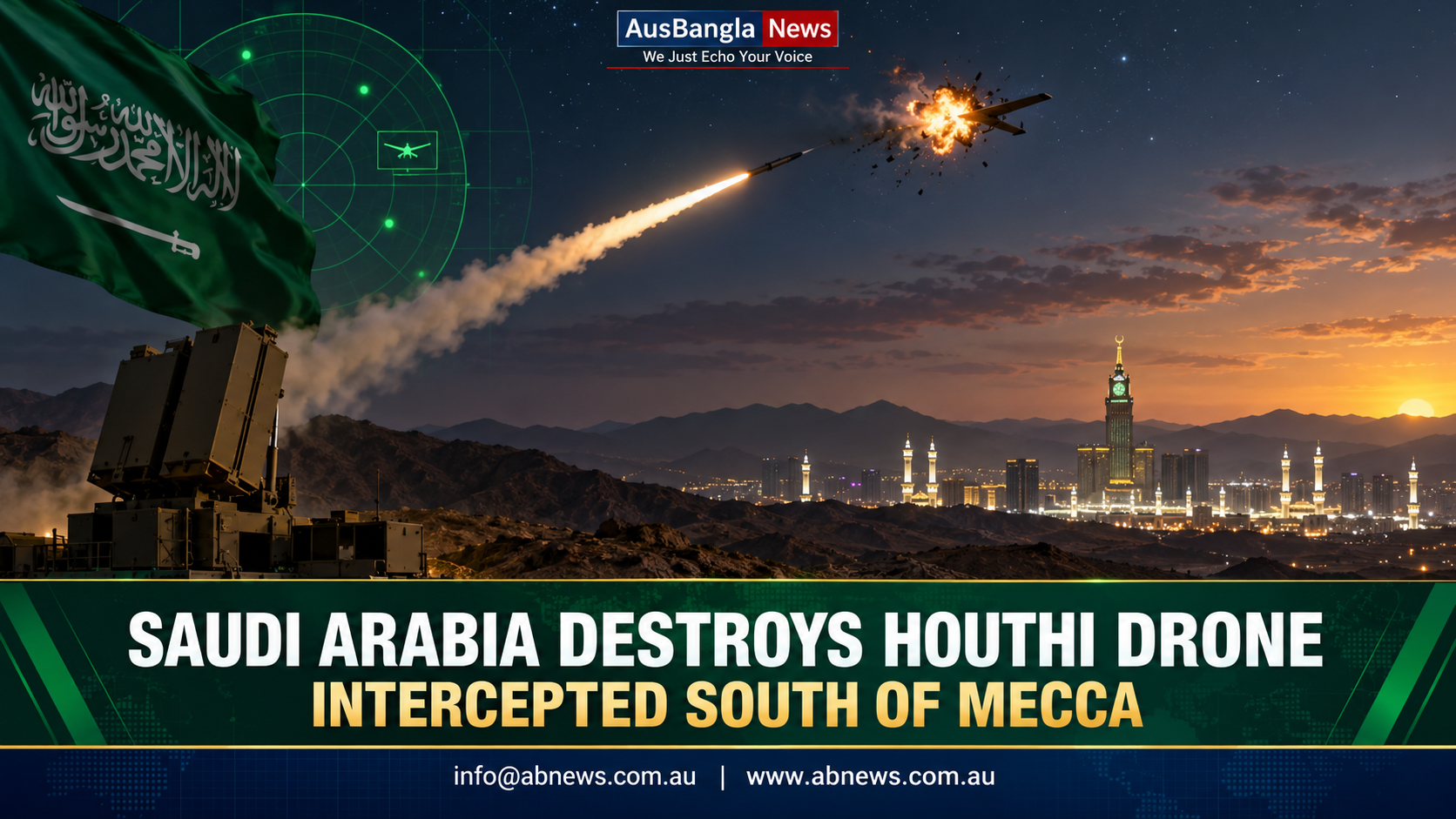

Saudi Arabia says its air defences intercepted and destroyed a drone south of Mecca before it entered restricted airspace over Islam’s holiest city. The Saudi-led military coalition attributed the drone to Yemen’s Iran-aligned Houthi movement. Coalition spokesperson Turki al-Malki described the safety of Mecca and its holy sites as a “red line,” warning that Saudi Arabia would take deterrent measures against any further threats. The Houthis, however, denied targeting Mecca or any religious site. The competing claims have not been independently verified.
Saudi authorities said the drone was destroyed outside Mecca’s restricted airspace. No casualties or damage to the holy city were reported.
Mecca welcomes millions of Muslims from around the world for Hajj and Umrah. Any military threat near the city is therefore likely to provoke alarm across Saudi Arabia and the wider Muslim community.
The Houthis have claimed responsibility for several recent operations against targets inside Saudi Arabia, saying they were conducted in response to Saudi military action in Yemen.
However, the group rejected the allegation that the latest drone was aimed at Mecca. It said it does not target religious sites.
This is not the first time Saudi Arabia has accused the group of threatening the holy city. In 2017, Saudi officials said a Houthi ballistic missile had been launched in the direction of Mecca. The Houthis also denied that allegation.
The incident comes amid escalating military tensions across Saudi Arabia, Yemen and the wider Middle East. Recent drone and missile attacks have prompted Saudi authorities to strengthen security measures around strategic infrastructure and major population centres.
The Houthis control significant territory in Yemen, including areas along the Red Sea coast near the Bab el-Mandeb Strait. Their expanding presence has raised concerns about international shipping and global energy supplies.
The Bab el-Mandeb Strait is one of the world’s most important maritime routes. Disruption there could affect ships moving between the Red Sea, the Suez Canal and the Indian Ocean.
Instability around the Strait of Hormuz has already forced greater reliance on alternative Saudi oil-export routes. Continued attacks on pipelines, ports or Red Sea shipping could further disrupt supplies and increase global fuel prices.
The latest incident has intensified calls for restraint and renewed diplomatic efforts to prevent the conflict from spreading.
Any attack threatening Mecca or another religious site could have consequences far beyond the immediate battlefield. Regional governments now face growing pressure to protect civilians, maintain secure shipping routes and prevent further escalation.























আপনার মতামত লিখুন :