


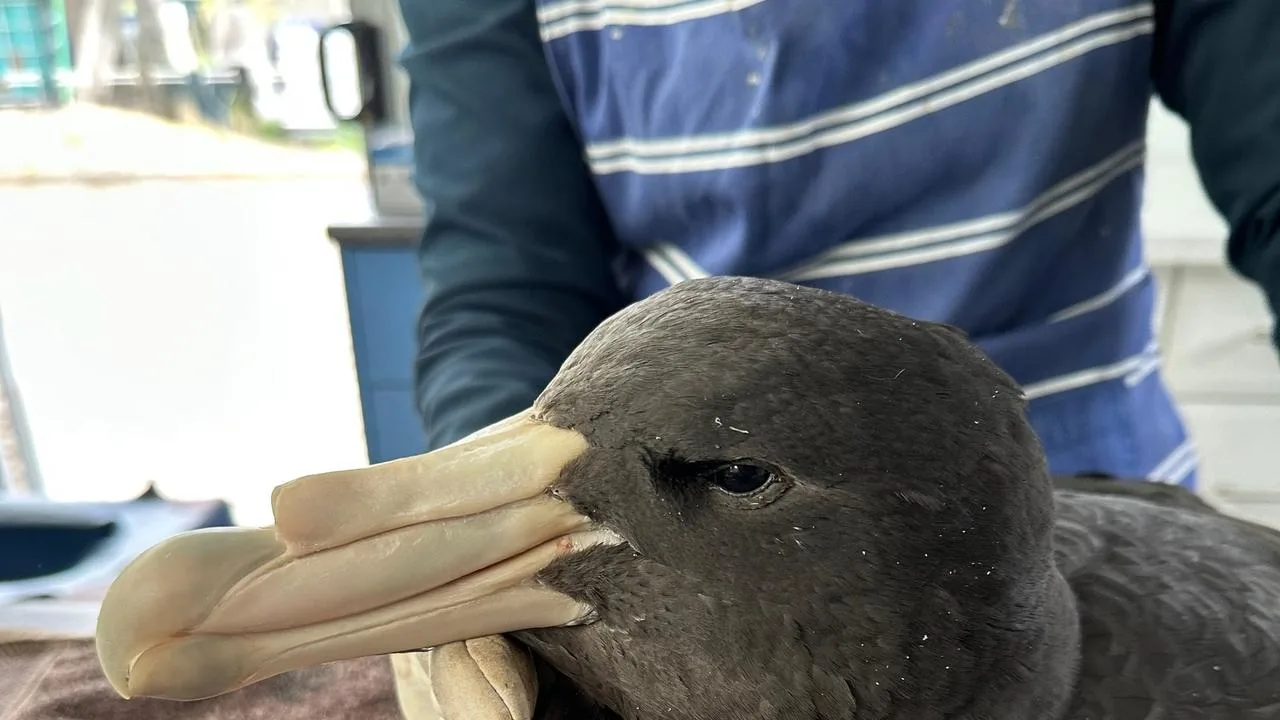

Nathan Schmidt: NSW has become the latest state to report a suspected case of H5 bird flu after Western and South Australia reported positive cases in recent weeks.
The state government is investigating whether a giant petrel found at Hawks Nest, north of Newcastle, may have bird flu after preliminary testing at a laboratory at Elizabeth Macarthur Agricultural Institute.
Another petrel found at perth’s prominent Mullaloo Beach had also returned a positive result and had been sent to CSIRO for further testing.
If confirmed, the two birds would be Australia’s sixth and seventh cases of H5N1 bird flu.
The NSW bird had also been sent to CSIRO for testing to determine whether the bird carried the highly pathogenic N1 strain, and is the first wild migratory seabird in NSW to return a suspect positive result for bird flu.
At a press conference, NSW Agriculture Tara Moriarty said the bird was “wild” and had been identified by a member of the public as looking ill.
The CSIRO test results were expected on Saturday, she said.
NSW Chief Veterinary Officer Jo Coombe said testing would determine whether the bird carried a “highly pathogenic” variant of H5.
“There are variants that circulate in wild birds that are low pathogenic and they don’t have any impact,” she said.
“So there have been detections through our wild bird surveillance network of the low pathogenic form, but never this high pathogenic.”
At least five birds have been confirmed to have bird flu since early June, most of which have been in Western Australia.
A dead bird found in Victoria earlier this week returned a negative test.
The birds are understood to have come on migratory routes from sub-Antarctic and Antarctic regions.
However, Dr Coombe said it was “an anomaly” for the suspected NSW case to make landfall like it had.
“The advice from the Bureau of Meteorology who have been working with the commonwealth government is that there have been some weather events that actually may have meant that they’ve gone a little off course, and that is why they’ve ended up so much closer to the Australian coast than they might otherwise have been,” she said.
NSW Agriculture Minister Tara Moriarty said there were no reports of positive cases impact the poultry industry.
Dr Coombe said a H5 vaccine would only be deployed if “conservation experts deemed it to be necessary” and was for endangered species.
Federal Agriculture Minister Julie Collins said the positive results were “disappointing”, they showed Australia’s biosecurity system was working.
Asked if it was inevitable the poultry industry would be impacted, Ms Collins said it would be a decision of the “emergency management response about whether or not we can eradicate, contain, or whether we manage an outbreak”.
“There is no detection in our poultry or agricultural systems,” she said.
“What I can say is that we have been preparing for the H5 bird flu incursion into Australia should it occur.”
Ms Moriarty, the NSW agriculture minister, said there were no reports of positive cases impact the poultry industry.
“There’s no need for panic buying eggs. Keep buying eggs, keep buying chicken,” she said.
“There’s no spread into our poultry industry in NSW. (There is) one bird, that we are currently testing through the national lab to see what strain of H5 it is.”
Ms Moriarty said authorities had worked closely with the poultry industry in the state for a number of years following an earlier outbreak of H7 bird flu.
Minister for Agriculture, Fisheries and Forestry Julie Collins and Australian Chief Veterinary Officer Dr Beth Cookson press conference
Federal Agriculture Minister Julie Collins said the positive results were ‘disappointing’. Picture: NewsWire / Martin Ollman.
Invasive Species Council policy director Carol Booth said that while years of preparation for bird flu was “paying off”, the threat to native wildlife was significant and called for the Albanese government to invest $200m into a wildlife resilience package to accelerate feral cat and fox control and protect bird breeding sites.
“The best defence we have is to make Australia’s wildlife as resilient as possible before widespread outbreaks occur,” Dr Booth said.
“That means rebuilding healthy populations that are better able to withstand disease and recover afterwards.
“We also urge the public to remain vigilant. If you find sick or dead birds or other wildlife, don’t touch them. Record the location and report it immediately through the Emergency Animal Disease Hotline.”
Earlier, Ms Collins said the government had been preparing and providing additional biosecurity for endangered and threatened species.



















আপনার মতামত লিখুন :